
Web3 on WordPress: accounts, wallets and community rewards with Cointacted
 Cointacted
Adding Web3 to a WordPress community does not have to mean replacing its accounts, moving every post onto a blockchain or asking new members to install a wallet before they can read. Cointacted takes a modular approach: WordPress owns the account and content, wallet connectors handle wallet interaction, and focused products add the on-chain workflows a site actually chooses to support.
A website account and a wallet serve different purposes
A WordPress account identifies a member inside the site. It carries the site’s access, content relationships and recovery process. A connected wallet provides a blockchain account through a particular provider and network. Seeing an address in a wallet panel does not automatically sign that person into WordPress or grant permission to edit another member’s content.
Wallet login is a separate, optional integration. Where it is configured, an existing user can link a wallet through an ownership proof and later authenticate with a fresh challenge. The authentication product still owns account registration, recovery and session policy. Connection, account linking and login should not be mistaken for the same action.
This distinction keeps the ordinary community usable. A member can use an account and onsite rewards without entering a token workflow. A wallet becomes relevant when the chosen feature actually needs an address, ownership proof, signature or transaction.
One shared session, focused wallet connectors
Cointacted Blockchain Core provides the shared wallet-session and network foundation. It does not contain every wallet provider or a general transaction executor. Dedicated connectors implement supported wallet behavior, while reviewed consumers such as Social Terminal, Social Mining and Token Creator use the same session instead of inventing separate connection states.
The selected wallet, transport, blockchain ecosystem and network are distinct. A multi-chain wallet may support several ecosystems, but an EVM account or permission cannot simply be reused as a Solana session. The available network choices are the intersection of the operator-enabled networks and the connector’s supported capabilities. The network and wallet-session guide explains that model.
The first connection requires an explicit action. After a successful connection, Core can remember the provider route and recheck the wallet’s existing authorization on a later wallet-enabled page. Its resume record contains no address, secret, proof or transaction. Disconnect clears that resume intent; removing an account’s linked login wallet is a separate action.
Connection is not consent to spend
Three interactions can look superficially similar because each involves a wallet, but their meaning differs:
- A connection request asks the wallet to expose an authorized account.
- An ownership proof signs a particular challenge, such as a site-bound account-linking request.
- A transaction can change blockchain state and may consume network fees.
A successful connection does not approve the latter two. Cointacted’s reviewed write flows use explicit context and confirmation, and the wallet still presents its own approval. A site-approved contract record is another policy input, not a guarantee that the contract is safe. The trusted-contract guide describes narrow contract and method boundaries.
Members’ wallet private keys and recovery phrases remain with their wallet, not in a WordPress form. Public addresses and transaction identifiers can still reveal activity, so they should not be treated as anonymous. Operators also have separate responsibilities for any server-side settlement issuer credentials; those are not member wallet secrets and require their own protected configuration.
Token Creator makes governance visible before deployment
Creating a token is not just choosing a name and symbol. Cointacted Token Creator uses a versioned blueprint describing the network, decimal precision, supply and supported authorities or controls. A deployed asset retains the blueprint revision used for its creation, allowing later configuration changes to remain distinguishable from the original deployment.
The plugin foundation supports ERC-20 deployments on enabled EVM networks and supported SPL Token or Token-2022 deployments on Solana. Supply and authority choices affect what the operator can do later: minting, freezing or rotating an authority is different from maintaining a permanently fixed supply. Some authority removals are irreversible.
A member’s completed browser report is not automatically a verified asset. Token Creator keeps it pending until trusted verification is recorded before registry publication. Neither that verification nor a successful deployment certifies the project’s economics, legal classification or suitability for an individual user. Consult the current Cointacted documentation for installed-product availability and deployment limits.
An illustrative member journey, with the boundaries intact
Consider a member who publishes a useful community contribution using a normal WordPress account. A reviewed reward policy records onsite points through Gamification, and the member can inspect their balance and reward history without turning the account into a wallet.
If the operator later enables an eligible Social Mining route, the member may choose token settlement. They connect a supported wallet, select eligible reward records and inspect the exact network, destination and payout preview. The claim binds those facts; the chain result must be checked before a payout is confirmed. Connecting a different wallet or switching networks is not permission to reinterpret an existing claim.
This is an example of the product architecture, not a currently funded Cointacted.com campaign. Funded rewards and payouts remain paused while production acceptance and recovery work continue. Independently funded advertising contributions are a separate integration; ad clicks, views and AdSense earnings do not create payout authority.
Use the modules that solve a real problem
Social Terminal can provide the shared command surface. Gamification handles onsite points. Blockchain Core and wallet connectors supply consistent wallet-session context. Token Creator defines assets, and Social Mining adds the optional claim layer. Winkdom or supported community integrations can present those focused interfaces without taking over their data or authority.
The benefit of that separation is choice: start with an ordinary community, add only the capability that is needed, and keep blockchain actions explicit. Tokens and wallets bring costs, public records and operational risks as well as possibilities. Cointacted’s direction is to make those choices understandable—not to promise investment returns, effortless income or legal compliance from installing a plugin.
Related stories

Build a Web3-ready WordPress community without making every member use a wallet
 Cointacted
Start with accounts, articles and community Spaces, then add optional wallets and independently governed contribution rewards when they serve a real member need.
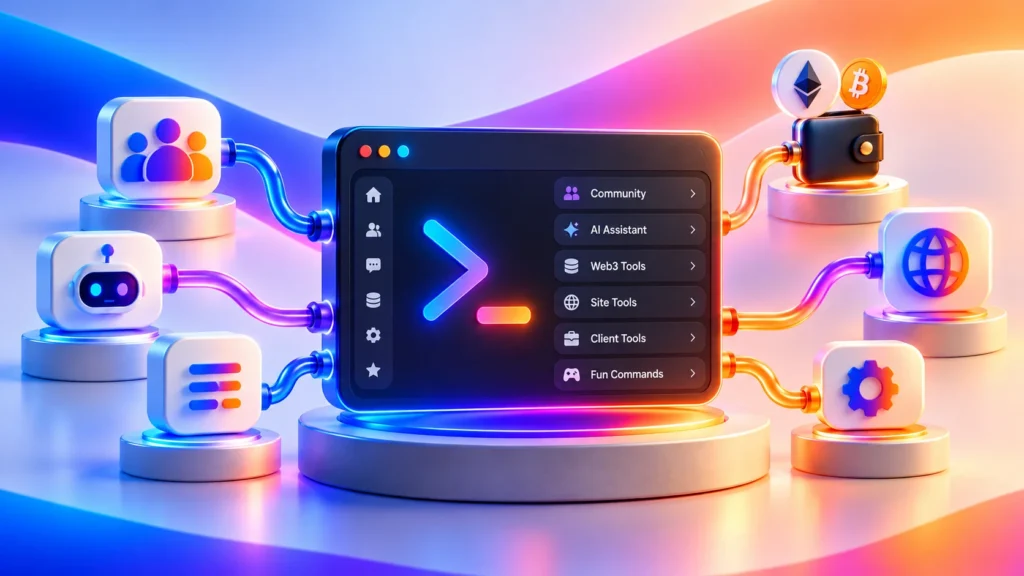
Cointacted Social Terminal: one command hub for your WordPress community
CointactedDiscover community, Search, optional AI and wallet tools from one WordPress command hub, starting with help rather than a command list to memorize.

Social Mining on WordPress: from community contributions to token claims
CointactedHow Cointacted separates contribution rewards, onsite points and optional token settlement, with an exact claim example and clear advertising boundaries.